First: there is no universal ceremony.
Kambo ceremonies vary across Indigenous traditions and contemporary settings. Modern facilitators may use different screening practices, preparation instructions, placements, ceremony elements, and forms of aftercare.
That means this guide describes a common overall arc—not a promise, a protocol, or instructions for self-administration. The absence of standardization is also one reason clear questions and health screening matter.
1. Before application.
A responsible encounter should begin with information rather than ceremony. There should be enough time to discuss what Kambo is, what the physical response may feel like, what is not known, and the possibility of serious complications.
Health screening should be specific.
A participant should be asked about health conditions, medications, pregnancy, recent substance use, and relevant medical history. A vague question such as “Are you healthy?” is not a meaningful screen.
This is also the time to establish consent and boundaries: what will happen, who will be present, how privacy is protected, whether touch may be involved, and how a participant can pause or stop.
Preparation should not feel like a test of devotion.
You should be able to ask ordinary questions, take time to decide, or choose not to participate. Pressure, secrecy, guaranteed outcomes, and the dismissal of medical concerns are warning signs.
2. The gates and application.
Small superficial points on the skin are created so the secretion can be absorbed. These points are often called “gates.” In photographs, uncovered gates may appear as small pale-pink circular or slightly irregular patches. Prepared portions of the secretion are typically pale and rest directly on the gates.
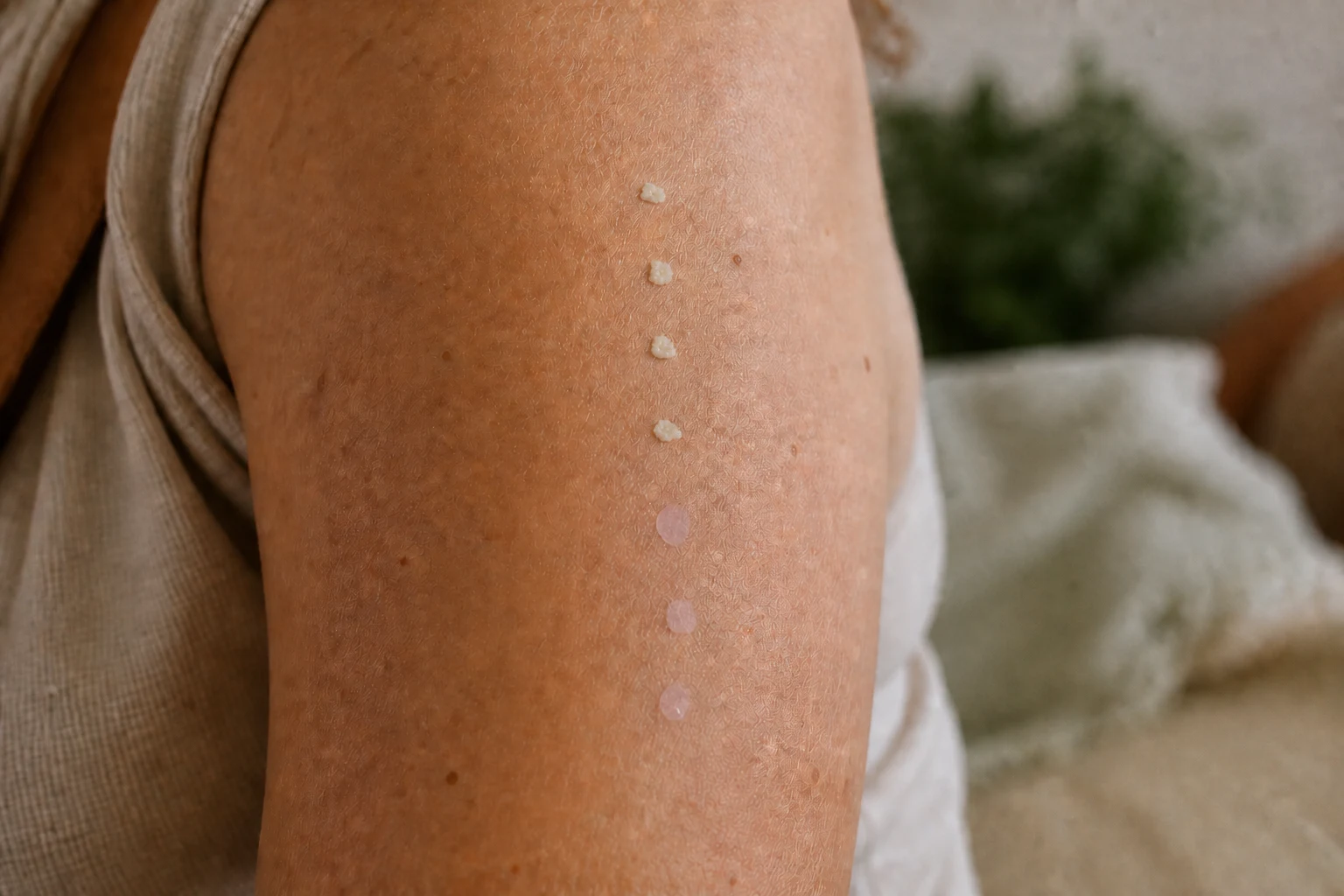
The number and placement of gates can vary. More is not automatically better, and visible intensity is not proof of a more meaningful ceremony. This process breaks the skin barrier, so cleanliness, handling, wound care, and infection risk deserve practical attention.
3. The acute physical response.
Published descriptions report that effects can begin within minutes. The experience is usually defined by a strong physical response rather than a classic psychedelic state.
Possible effects include:
- warmth, flushing, sweating, or chills;
- a rapid or pounding heartbeat and changes in blood pressure;
- nausea, vomiting, abdominal discomfort, bowel urgency, or diarrhea;
- facial or other swelling;
- dizziness, weakness, drowsiness, or feeling faint.
Not everyone experiences the same effects, sequence, or duration. Vomiting is common in reports, but it is not a reliable measure of benefit, cleansing, or whether the ceremony “worked.”
Intensity and danger are not the same thing.
Some discomfort may be expected in the context of Kambo, but a facilitator should not explain every severe or worsening symptom as part of a necessary purge. Confusion, collapse, seizure, trouble breathing, severe or persistent chest or abdominal pain, or loss of consciousness require urgent medical attention.
4. Settling and afterward.
Acute effects are often described as relatively short, but there is no guaranteed timeline. A participant may feel tired, weak, lightheaded, nauseated, headachy, emotionally tender, calm, or neutral after the most intense phase passes.
There should be time to reorient without being rushed out of the setting. Persistent, worsening, or unusual symptoms should be treated as medical concerns—not reframed as spiritual resistance.
Some people retrospectively report clarity, relief, or emotional openness. Others do not. Those experiences can feel personally meaningful, but they do not establish that Kambo treated a health condition.
A note about water.
Published case reports connect Kambo with dangerous low sodium and water imbalance. This guide intentionally does not prescribe a volume or hydration protocol. Discuss individual medical considerations with a licensed clinician and be cautious of rigid, one-size-fits-all instructions.
Questions a newcomer can ask.
- What training and supervised experience do you have?
- How do you screen health conditions, medications, and contraindications?
- What would cause you to decline or postpone a ceremony?
- What is your plan if someone develops concerning symptoms?
- How is the secretion sourced, identified, stored, and handled?
- What support is available before, during, and after ceremony?
A trustworthy answer should be clear enough to understand without requiring you to accept a belief system. “Trust the medicine” is not an emergency plan.
If you are experiencing concerning symptoms after Kambo, contact Utah Poison Control at 1-800-222-1222. For trouble breathing, seizure, collapse, severe confusion, or another emergency, call 911.
Sources and further reading.
- den Brave, Bruins & Bronkhorst (2014): description of Kambo application, acute effects, and peptides.
- Nogueira et al. (2022): transdisciplinary review of biology, traditional and modern use, toxinology, and medical considerations.
- Sacco et al. (2022): review of published acute poisoning cases and clinical findings.
- Alamos, Walker & Miranda (2020): report on severe neurologic risk and characteristic application sites.