More than a substance.
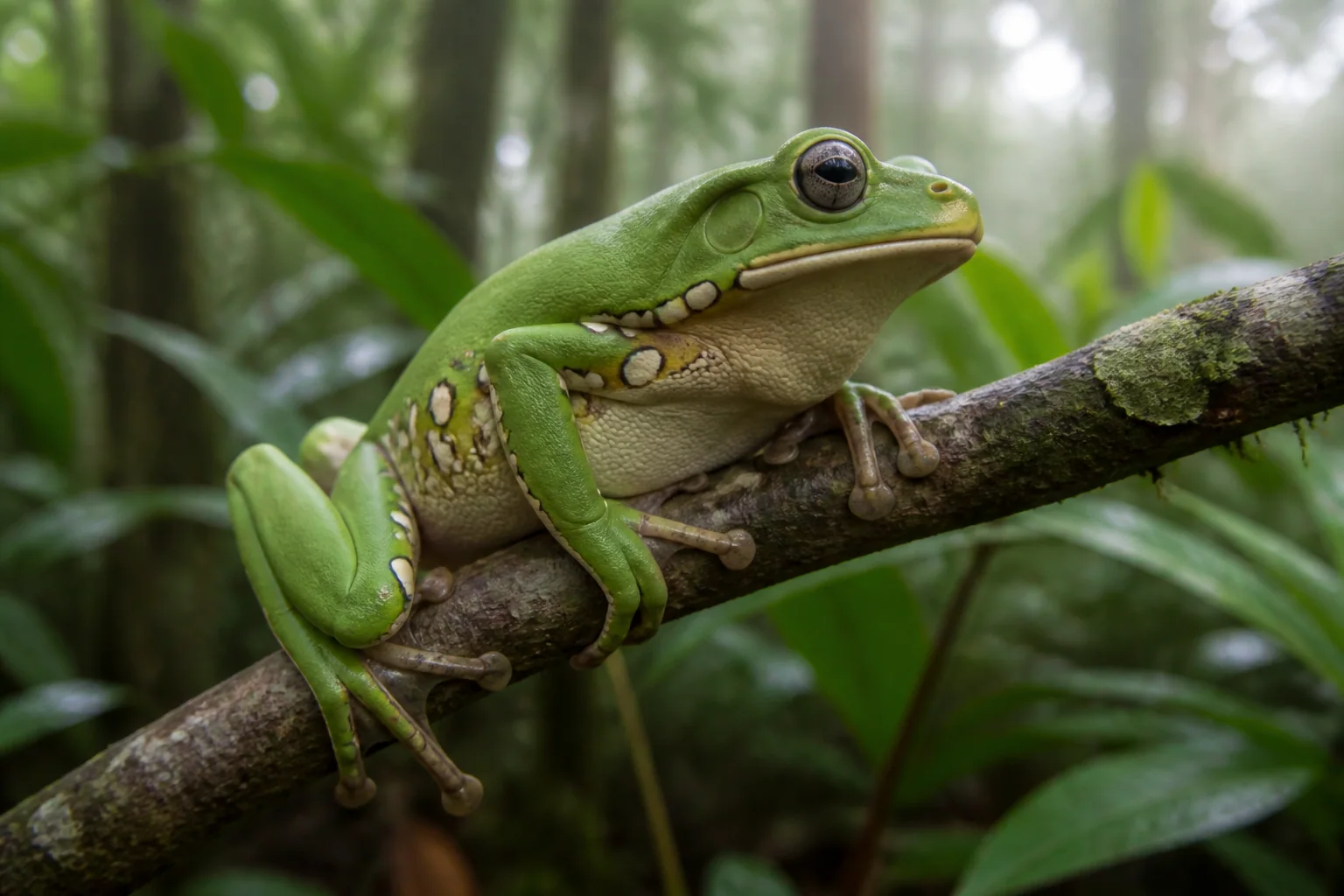
The word “Kambo” can refer to the frog, its secretion, or the ceremony itself. That overlap matters. Kambo is not simply a product extracted from nature; it is connected to living Indigenous knowledge and practices from the western Amazon.
The frog is also known in English as the giant monkey frog, giant leaf frog, or bicolored tree frog. Its skin produces a complex secretion as part of the animal’s natural defense system. Researchers have identified numerous biologically active peptides in that secretion.
Kambo is generally not described as a classic psychedelic. Its defining effects are physical rather than visual or hallucinatory. A ceremony may still feel emotionally significant, but that is different from saying the substance produces a conventional psychedelic state.
Origins and tradition.
Published reviews connect Kambo with Indigenous peoples of the Amazon, including Matsés, Mayoruna, Katukina, Yawanawá, and Kaxinawá communities. Uses, stories, names, and ceremony forms are not identical across all peoples, so it is more accurate to speak of traditions than one universal tradition.
Accounts describe applications associated with hunting, strength, purification, protection from misfortune, and healing practices. These meanings belong to specific cultural contexts. They should not be flattened into the modern marketing language of “detox,” “biohacking,” or a cure-all.
Respect begins with precision.
Calling Kambo “ancient frog medicine” may sound respectful, but it can erase the distinct communities that have carried these practices. A more honest introduction acknowledges both the living traditions and the limits of what outsiders understand about them.
What happens in the body?
The secretion contains peptides that can affect blood vessels, smooth muscle, the gastrointestinal system, and other physiological processes. That is why the response can begin quickly and feel intense.
Commonly reported acute effects include warmth or flushing, sweating, a pounding or rapid heartbeat, nausea, vomiting, abdominal discomfort, dizziness, weakness, and swelling. These effects are not evidence that “toxins” are leaving the body. They are signs that biologically active compounds are affecting the body.
Individual peptides are scientifically interesting, and some have been studied in laboratory or pharmacological contexts. But research into an isolated molecule is not the same thing as evidence that applying the whole secretion treats a disease.
Traditional use and modern practice are not identical.
Kambo has moved far beyond the Amazon and is now offered in cities across the world. Contemporary ceremonies may include music, breathwork, prayer, meditation, or other practices that are not shared across every Indigenous or modern setting.
There is also no single globally regulated Kambo protocol. Training claims, screening methods, preparation instructions, number of gates, setting, and aftercare can vary. A polished room or spiritual vocabulary does not by itself establish competence or safety.
For someone considering a ceremony, the most useful questions are practical: How is health history screened? What conditions or medications lead to exclusion? What is the emergency plan? How is consent handled? How is the secretion sourced and stored?
What does the evidence show?
People seek Kambo for many reasons and some describe meaningful experiences afterward. Those reports deserve to be heard as personal experiences—but they do not prove that Kambo caused a medical improvement.
Current clinical evidence does not establish Kambo as a treatment for depression, addiction, chronic pain, autoimmune disease, cancer, or other conditions. It should not replace care from a licensed medical or mental-health professional.
Medical literature does document adverse events, including severe electrolyte disturbance, seizures, liver injury, kidney injury, esophageal injury, altered consciousness, cardiac complications, and deaths. These outcomes appear uncommon in the published record, but underreporting and the lack of standardized surveillance make the true frequency difficult to know.
A grounded next step.
Learning about Kambo does not require deciding to participate. Take time, read beyond promotional claims, discuss your health history and medications with a licensed clinician, and treat unanswered safety questions as meaningful information.
If you are already experiencing concerning symptoms after Kambo, contact Utah Poison Control at 1-800-222-1222. For trouble breathing, seizure, collapse, severe confusion, or another emergency, call 911.
Sources and further reading.
- Nogueira et al. (2022): biology, toxinology, ethnopharmacology, and medical aspects of Phyllomedusa bicolor.
- den Brave, Bruins & Bronkhorst (2014): the secretion, ritual, application, and bioactive peptides.
- Sacco et al. (2022): literature review of published acute Kambo poisoning cases.
- Sacco et al. (2025): systematic review of Kambo administration and reported sudden deaths.